Evita
1996 · 135 min.
Review
Machine-translated from Danish.
Media hullabaloo has very much accompanied Alan Parker's screen version of the musical Evita, not least because of the eternally controversial Madonna in the title role of Evita. Madonna actually does superbly, and having seen the film I find it hard to picture a hissing Michelle Pfeiffer or an ageing Meryl Streep in the demanding lead role. Madonna can radiate both the young Eva Duarte's cheek and the mature Eva Perón's class.
Evita is not a musical, for there are hardly any dance numbers; it is a sung-through opera. Exactly as in "Les parapluies de Cherbourg", everything is sung! The songs can act as a brake on momentum and suspense, but the film was varied enough that I, at any rate, was not bored. Only towards the end did I feel that Parker was dragging the show out. It might have been an advantage to know Andrew Lloyd Webber's songs better, but it went well enough.
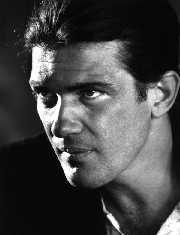
Evita is about Eva Duarte's rise from working-class provincial girl to President Juan Perón's powerful wife. Eva uses men as stepping stones on her way to the top in show business and later in politics. The film takes a rather critical view of Eva, contrary to what certain critics have claimed. Eva wants the best for the people, of whom she is, after all, one, but she still cannot help favouring herself and exploiting everyone who might be useful to her career. Antonio Banderas plays the omnipresent commentator Che, who helps make the audience aware of Eva's shortcomings.
The quality of the singing is rather uneven, but that perhaps also depended on the difficulty of the songs. Sometimes Banderas' voice sounded lovely; at other times it was embarrassing.